The right approach always starts with the question
The way we work together is always determined by the question or situation you bring. You do not need to decide in advance whether coaching, team coaching, supervision, Gestalt therapy or another approach would be most appropriate.
In our first conversation, we explore the situation together and, based on this, choose the form of work and methodological approach that can best support you.
The methods below are not isolated from one another. In my work, they often connect and inform each other, while the framework and purpose of our work always remain clear.
Individual Coaching
Individual coaching provides a focused space to work on a question, decision or situation that matters to you. The starting point may be a leadership challenge, a professional transition, a difficult decision, a relationship at work, or a broader question about how you want to move forward. Rather than giving advice or offering ready-made solutions, I work with you to explore the situation from different perspectives, recognise patterns and assumptions that may be shaping it, and identify new possibilities for action. Coaching is future-oriented and typically focuses on a defined question or development goal. At the same time, meaningful change often requires more than finding a quick solution. It may also involve understanding how you respond to situations, what influences your choices and what might enable you to act differently. The process may be relatively short and focused or extend over a longer period, depending on the question and the purpose of our work. We agree on the goals, framework and frequency together at the beginning and review them as the work progresses.
Team coaching focuses on the team as a whole – not simply on the individuals within it. We work with the relationships, patterns and dynamics that shape how the team operates, makes decisions, handles tensions and works towards shared goals.
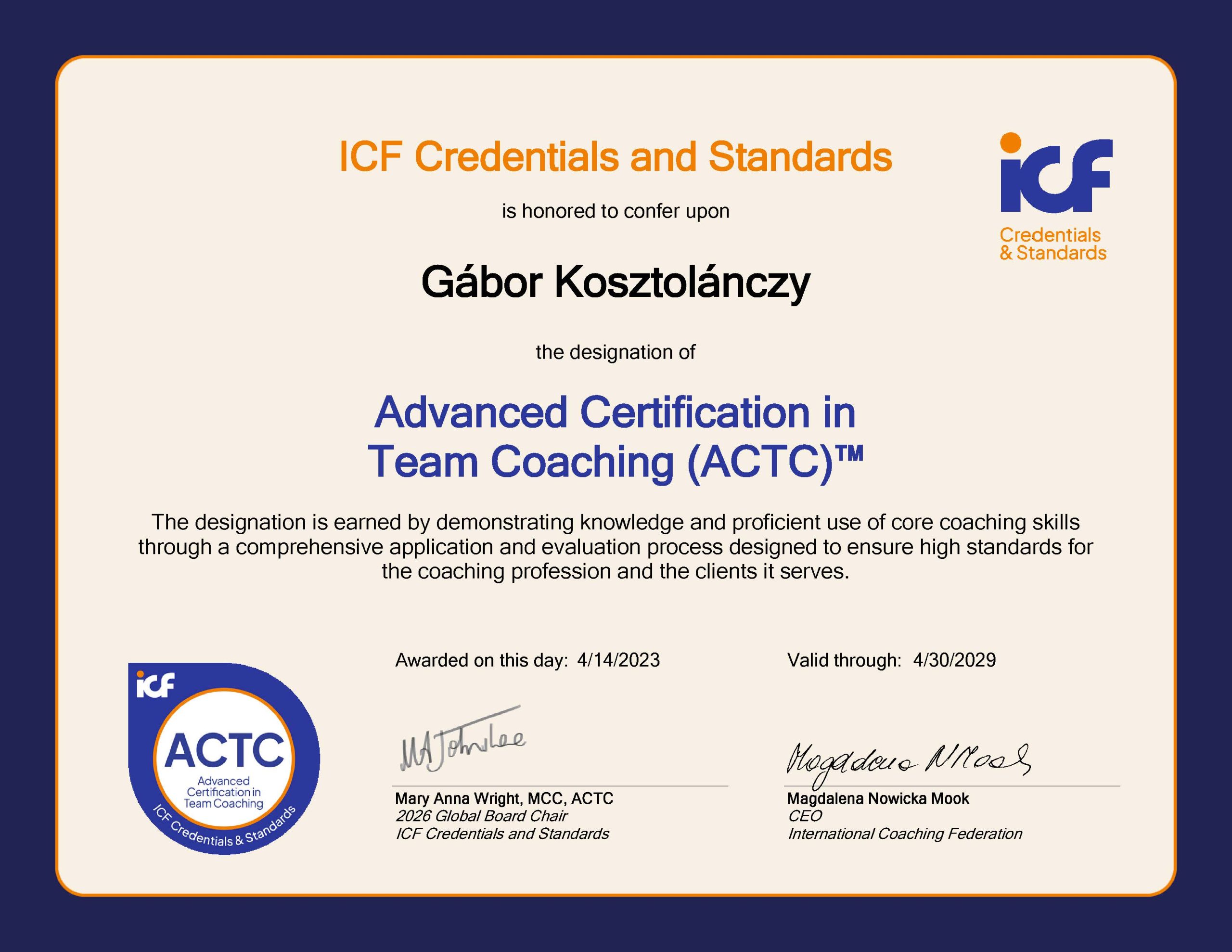
My primary approach is Transformative Team Coaching. It looks beyond immediate performance issues and explores the deeper patterns that influence the team’s functioning. This may include roles and relationships, trust, communication, decision-making, accountability, conflict, leadership dynamics and the way the team relates to the wider organisational system.
The work is based on real situations the team is facing. Rather than discussing teamwork only in abstract terms, we pay attention to what is actually happening in the room and in the team’s everyday work. This allows recurring patterns to become visible and gives the team an opportunity to experiment with different ways of working together.
A team coaching process usually consists of a series of sessions rather than a single workshop. At the beginning, we clarify the purpose of the work and agree on the framework with the team and its leader. Where useful, the process may also include interviews or diagnostic work to better understand the team’s current situation.
Alongside Transformative Team Coaching, I also work with teams through Action Learning and PCM-based processes. These are distinct forms of working with teams, each with its own purpose and methodology, and may be appropriate depending on the team’s situation and development needs.
Mentoring is a professional development process in which reflection on your own practice is combined with my experience and professional perspective. Unlike coaching, mentoring allows me to share relevant knowledge, observations and experience when this can support your development.
I primarily work as a mentor with coaches and other helping professionals. The focus may be on developing your professional practice, exploring questions related to your role, strengthening specific competencies, or reflecting on how you work with clients, teams and organisations.
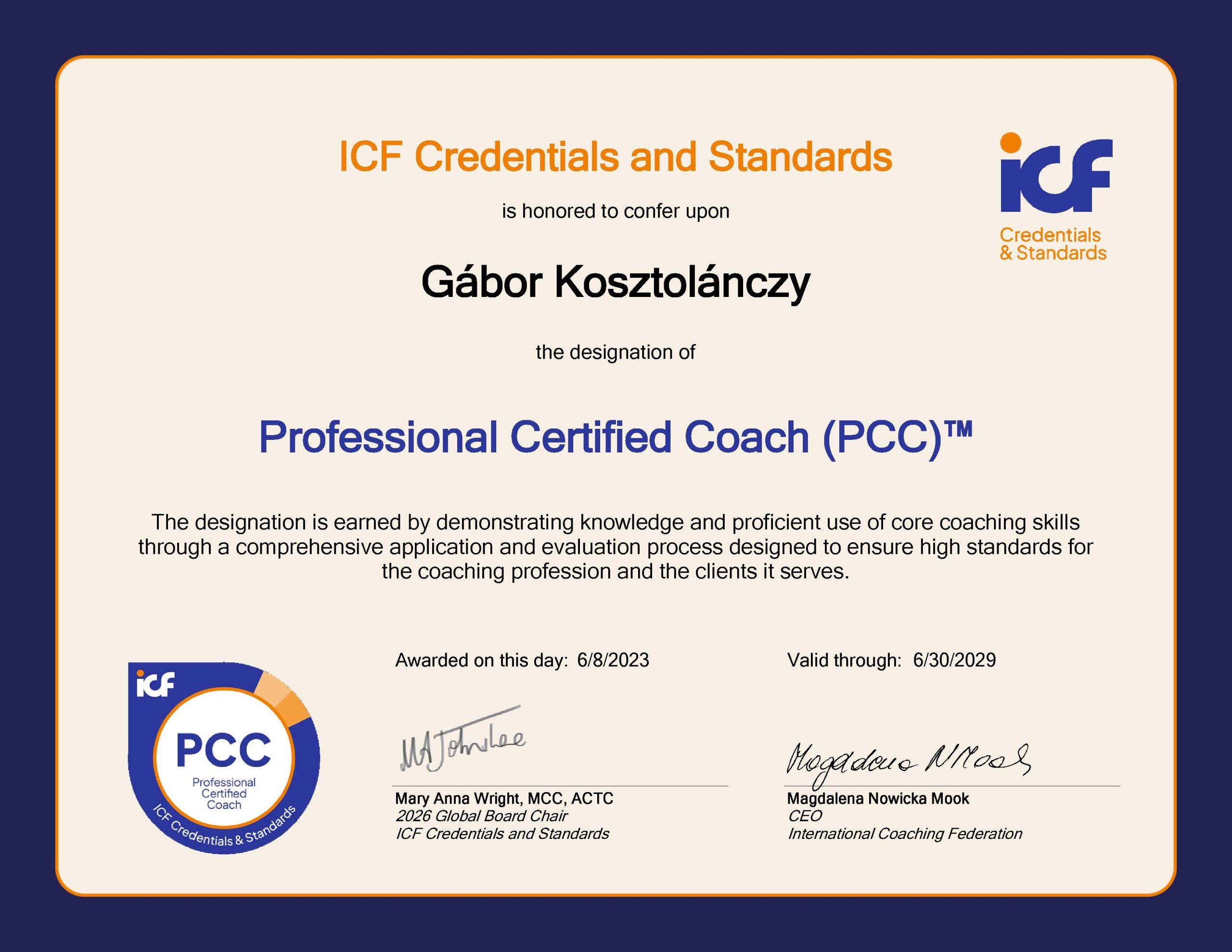
Mentoring can also support coaches working towards or renewing an ICF credential. In mentor coaching, we focus specifically on your coaching practice and its relationship to the ICF Core Competencies, using reflection and feedback to support your professional development.
The aim is not to provide a single “right” way of working, but to help you develop a more conscious, confident and authentic professional practice.
Organizational development focuses not only on individuals or teams, but on the organisation as a system. Structures, decision-making processes, leadership practices, information flow, relationships and organisational culture continuously influence one another – and difficulties often emerge from the interaction between them rather than from a single identifiable cause. My work therefore begins with understanding what is actually happening in the organisation. Depending on the situation, this may involve interviews, diagnostic tools, work with leaders and teams, facilitated workshops, or a combination of these. The process may focus on issues such as leadership collaboration, roles and responsibilities, decision-making, communication and information flow, organisational change, cross-functional cooperation or recurring patterns that limit effectiveness. I do not approach organisations with a predetermined solution. The aim is to identify where change can have a meaningful impact and to develop ways of working that fit the organisation’s reality and can be sustained in everyday practice.
Supervision offers a reflective professional space for coaches and other helping professionals to explore their work from a different perspective. The focus is not only on the client or the situation, but also on what happens to you as a practitioner while working with it. You may bring a specific case, a difficult client relationship, an ethical dilemma, uncertainty about your role, or a recurring situation that you find challenging. We can also explore broader questions about your professional identity, boundaries, responsibilities and development. Supervision creates an opportunity to step outside the immediacy of the situation and notice patterns, assumptions, reactions and relational dynamics that may be difficult to see from within. This can open up new perspectives and new possibilities for professional action. I see supervision not as evaluation or quality control, but as a space for reflection, learning and professional development. It can support both the quality of your work and your ability to remain present, aware and sustainable in a profession centred on helping others.
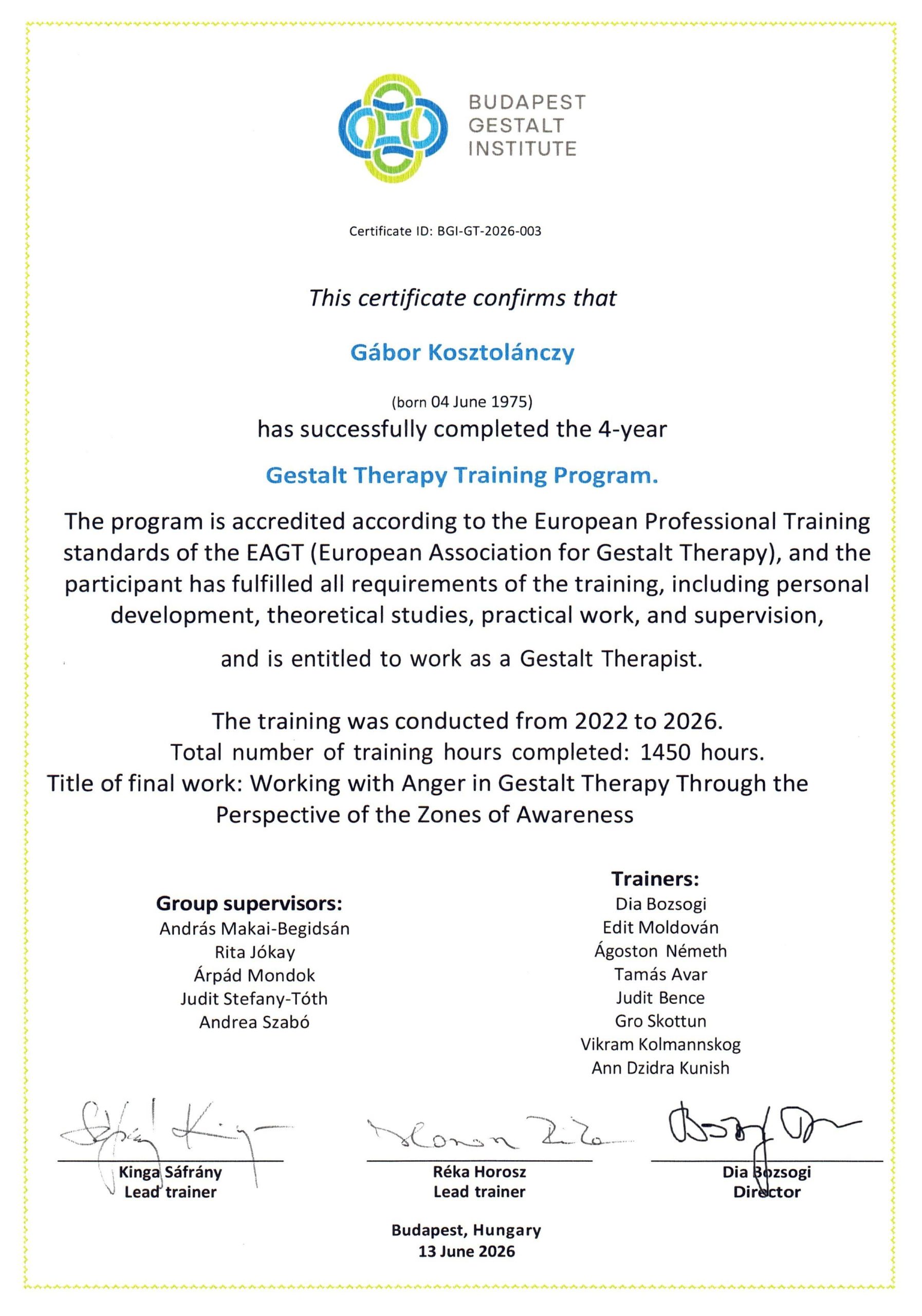
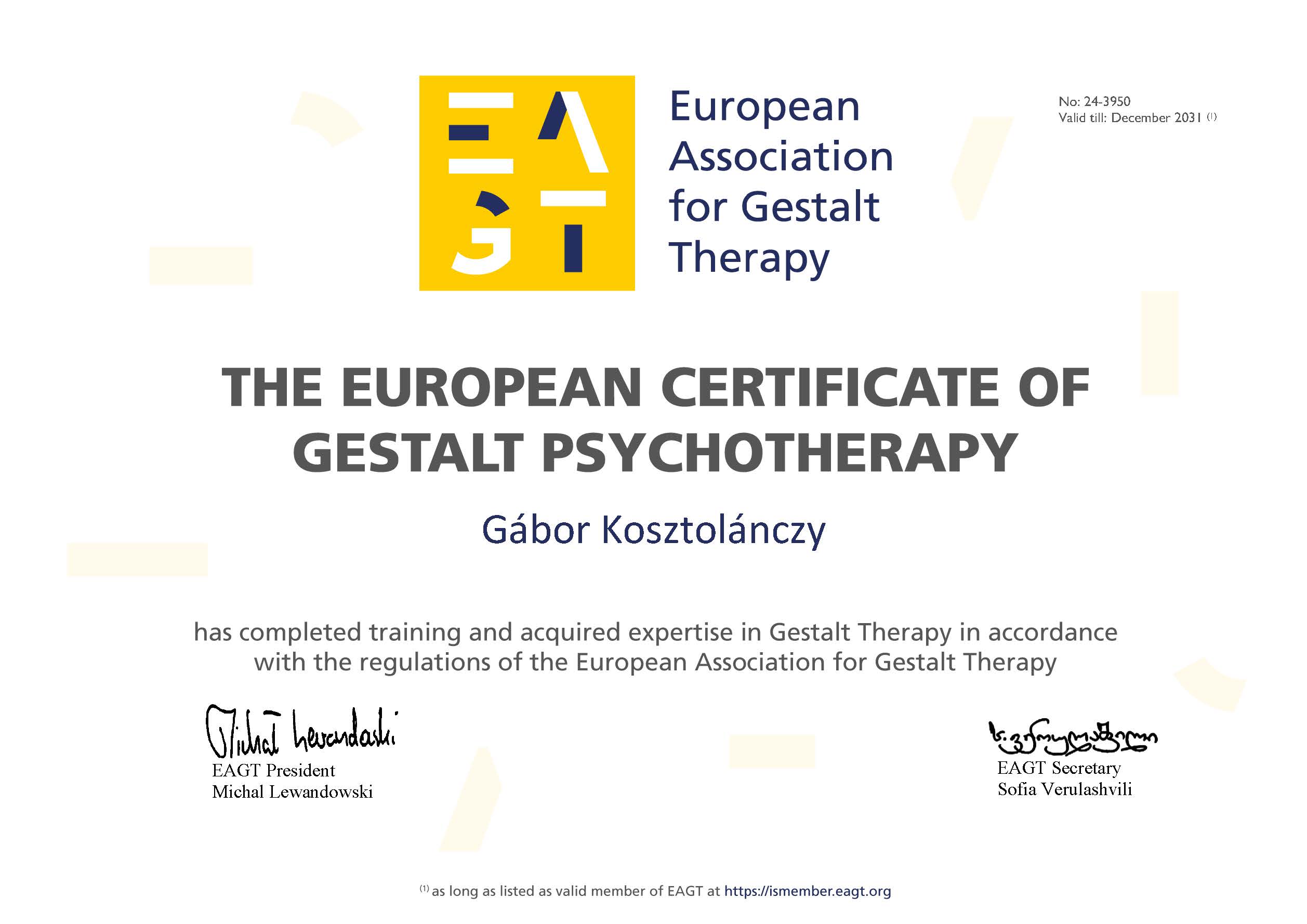
Gestalt therapy is an experiential approach that focuses on how you experience yourself, your relationships and the situations you are in – here and now. Rather than looking only for explanations of why something happens, we also pay attention to what is happening in the present moment: your thoughts, emotions, bodily sensations, reactions and ways of relating to others. The starting point may be a recurring difficulty, a relationship issue, a life transition, questions of identity, a sense of being stuck, or simply the wish to understand yourself more deeply. In our work, we explore how familiar patterns emerge and how they may once have been useful but now limit your choices. Becoming more aware of these patterns can create space for different ways of responding and relating. Gestalt therapy is not about giving advice or telling you how you should live. It is a collaborative process in which greater awareness can support more freedom, responsibility and choice in how you relate to yourself and to others. The work may be shorter and focused on a particular issue, or it may develop into a longer process of self-exploration and personal change.
The Process Communication Model (PCM) is a practical framework for understanding personality, communication and behaviour under stress. It helps us recognise that people perceive the world differently, are motivated by different psychological needs, and respond differently when those needs are not met. PCM describes six personality types that are present in all of us in different proportions. Understanding your own personality structure can help you recognise your preferred communication style, your sources of motivation and the characteristic patterns that may appear when you are under stress. In individual work, PCM can provide a useful language for understanding your own reactions and communication patterns. For leaders, it can support more conscious communication and help them adapt their approach to different people and situations. With teams, PCM can also be used as a distinct development process. It can help team members better understand differences in communication, motivation and stress behaviour, and use these differences more consciously in their collaboration. The purpose is not to put people into boxes. Rather, PCM offers a shared language that can make differences easier to recognise, discuss and work with.